HOME > NEWS > NEWS > Delivering High-Speed Infrastructure: TZYR HWEY (T.H.) Deep Dive into PCI Express (PCIe) Connectors
Delivering High-Speed Infrastructure: TZYR HWEY (T.H.) Deep Dive into PCI Express (PCIe) Connectors
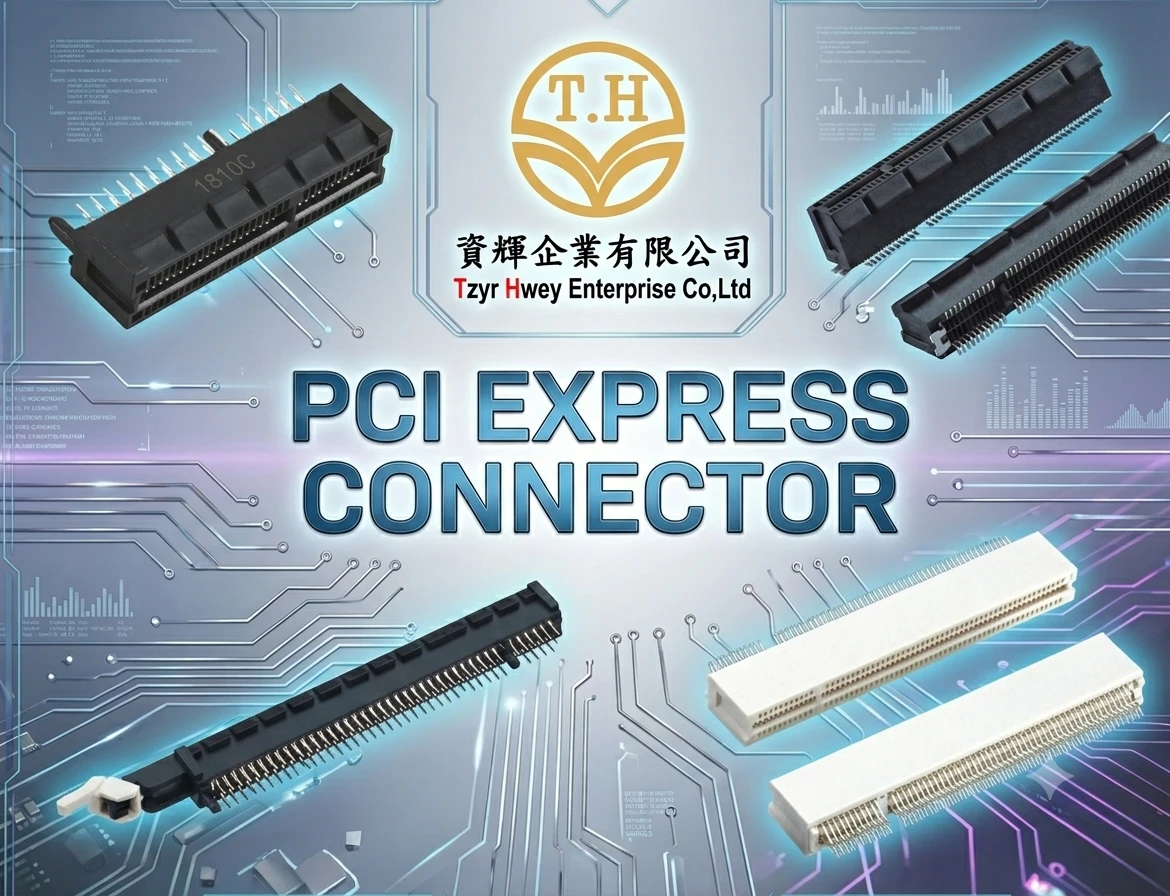
In an era driven by the explosive growth of Artificial Intelligence (AI), big data analytics, and high-speed data transmission, the volume of data throughput within hardware infrastructure has scaled to unprecedented heights. Whether in Industrial Computing (IPC), AI servers, edge computing terminals, or high-definition frame grabbers, the essential backbone managing this data highway is the PCI Express (PCIe) Connector.
At TZYR HWEY Enterprise Co., Ltd. (T.H.), we leverage our profound electronic component expertise and hardware engineering consultant background to unpack the technical details of this bandwidth-defining interface.
1. Defining the PCIe Connector: Lanes and Structural Scalability
A PCIe connector is a high-speed, serial differential bus interface mounted on the PCB motherboard to accept expansion cards (such as GPUs, AI accelerators, high-speed NICs, and NVMe SSDs). Its defining feature is its scalable, lane-based routing architecture:
As the PCIe standard evolves, data rates double with each generation. This exponential leap puts massive demands on the material sciences and structural geometry of the connector housing and pins:
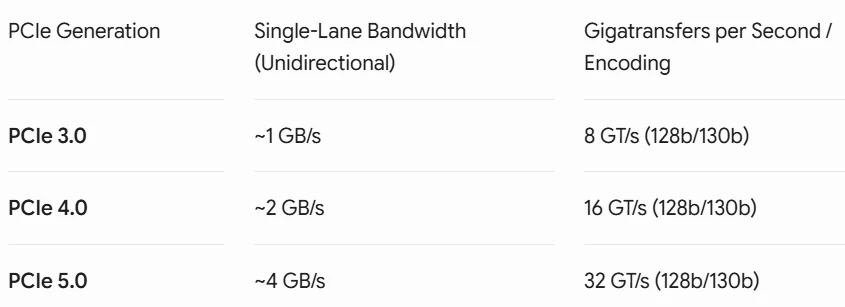
💡 T.H. Technical Insight: When routing signals at PCIe 5.0 or Gen 6 frequencies, hardware becomes highly susceptible to attenuation, crosstalk, and electromagnetic interference (EMI). At these speeds, a connector cannot be just plastic and copper; it requires high-frequency structural engineering to manage continuous data integrity.
👉 Need high-frequency connectors or customized high-speed cable assemblies? Contact our technical consulting team today
At TZYR HWEY Enterprise Co., Ltd. (T.H.), we leverage our profound electronic component expertise and hardware engineering consultant background to unpack the technical details of this bandwidth-defining interface.
1. Defining the PCIe Connector: Lanes and Structural Scalability
A PCIe connector is a high-speed, serial differential bus interface mounted on the PCB motherboard to accept expansion cards (such as GPUs, AI accelerators, high-speed NICs, and NVMe SSDs). Its defining feature is its scalable, lane-based routing architecture:
- Scalable Configuration (x1 to x16): PCIe connectors are physically sized according to their lane capacity, with x1, x4, x8, and x16 being the industry standards. Each individual lane consists of two pairs of differential signaling wires—one pair for transmitting (Tx) and one for receiving (Rx). Bandwidth scales linearly with the number of lanes.
- Seamless Backward Compatibility: PCIe offers excellent physical and protocol compatibility. Shorter expansion cards (e.g., a x4 network card) can be plugged into longer slot configurations (e.g., a x16 slot) and operate seamlessly, giving hardware developers maximum deployment flexibility.
As the PCIe standard evolves, data rates double with each generation. This exponential leap puts massive demands on the material sciences and structural geometry of the connector housing and pins:
💡 T.H. Technical Insight: When routing signals at PCIe 5.0 or Gen 6 frequencies, hardware becomes highly susceptible to attenuation, crosstalk, and electromagnetic interference (EMI). At these speeds, a connector cannot be just plastic and copper; it requires high-frequency structural engineering to manage continuous data integrity.
3. Three Key Indicators of High-Quality PCIe Connectors
When evaluating or sourcing components for our clients, the T.H. engineering team focuses on three key quality metrics:Surface Mount Technology (SMT) & High-Frequency Profiling
Legacy PCIe slots relied heavily on Through-Hole Technology (THT). However, at PCIe 4.0/5.0 frequencies, the remaining metal pin-stubs of through-hole designs act as antennas, causing severe signal reflection. Modern high-quality connectors utilize SMT (Surface Mount Technology) or Press-Fit (Compliant Pin) configurations. These designs optimize terminal contact geometry to maintain strict impedance matching within $85Omega pm 10%$, eliminating signal degradation.Precision Gold Plating Strategy
PCIe slots frequently operate in high-temperature environments under heavy payload processing, requiring long-term mechanical contact stability. T.H. emphasizes a precise plating strategy: contact points feature 15u" to 30u" heavy gold plating over high-elasticity Phosphor Bronze base metals. This ensures contact resistance remains strictly within the milliohm range ($le 30mOmega$) even after repeated insertions or long-term operational vibration.High-Temperature Polymers & Secure Retention Latches
Modern AI accelerators and heavy GPUs exert notable physical strain on motherboard slots. Under industrial vibration, this weight can rip solder pads off the PCB. Premium PCIe connectors mitigate this risk by integrating reinforced metal hold-downs (soldering pegs) to lock the connector body to the PCB, alongside a robust mechanical retention latch at the slot's tail. The plastic body is molded from high-grade LCP (Liquid Crystal Polymer), guaranteeing zero structural deformation during 260°C reflow soldering cycles.4. How TZYR HWEY (T.H.) Empowers Your High-Speed Infrastructure
In high-frequency hardware design, a minor deviation in component specification can lead to system throttling or communication failure. TZYR HWEY (T.H.) acts as your strategic technology consultant and supply chain partner:- Early-Stage High-Frequency Design Reviews: For your PCIe 4.0/5.0 development projects, our engineering team assists with front-end datasheet verification—evaluating impedance control, pin geometries, and material thermodynamics to eliminate technical risk.
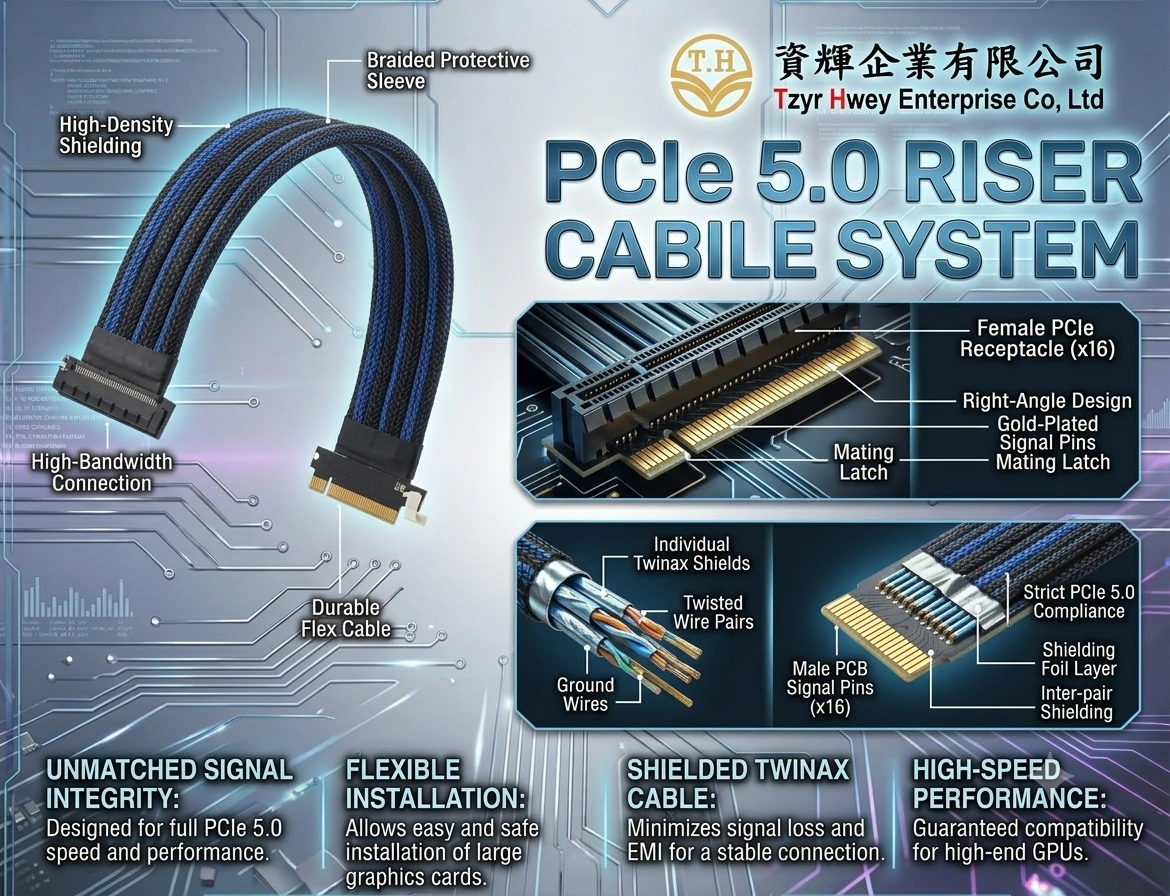
- Custom Flexible Interconnects: We support High-Mix, Low-Volume (HMLV) requests for specialized internal wiring, such as custom high-speed PCIe Riser Cable assemblies, ensuring secure signal propagation across complex chassis layouts.
- Supply Chain & Cost Management: When market fluctuations impact global raw material costs, T.H. leverages deep connector industry insights to identify cost-effective alternative components that fully match the technical benchmarks of major tier-one manufacturers.
👉 Need high-frequency connectors or customized high-speed cable assemblies? Contact our technical consulting team today
-
The Secret Weapon Against Assembly Tolerance: TZYR HWEY (T.H.) Explains the Core Advantages of Floating Connectors
-
Unlocking the Key to Industry 4.0 Connectivity A Deep Dive into M12 Connectors with TZYR HWEY (T.H.)
-
Zero Downtime TZYR HWEY (T.H.) Introduces Industrial USB-C Screw Lock Solutions to Secure Machine Vision Connectivity
-
Leading the Smart Interconnect: Join TZYR HWEY (T.H.) at COMPUTEX 2026