HOME > NEWS > NEWS > Shifting to High-Definition Manufacturing: Understanding DisplayPort (DP) Connectors and Procurement Strategy
Shifting to High-Definition Manufacturing: Understanding DisplayPort (DP) Connectors and Procurement Strategy
Shifting to High-Definition Manufacturing: Understanding DisplayPort (DP) Connectors and Procurement Strategy
As 5G, Edge AI, and Smart Manufacturing continue to accelerate globally, modern industrial environments demand far more than just "functional" video transmission. The industry now trends toward extreme bandwidth, zero latency, and ultra-high resolutions.
Within high-end hardware designs—including Industrial Computing (IPC), advanced medical imaging, automation surveillance, and Machine Vision systems—DisplayPort (DP) has emerged as a cornerstone video interface alongside HDMI, driven by its robust bandwidth and unique packet-based architecture.
At TZYR HWEY Enterprise Co., Ltd. (T.H.), we leverage our deep engineering consulting background to bring you a comprehensive technical breakdown of DisplayPort technology.
1. Physical Form Factors of DP Connectors
In hardware layout and custom cable assembly, DP connectors primarily present themselves in three physical form factors to accommodate diverse spatial footprints:
Standard DisplayPort
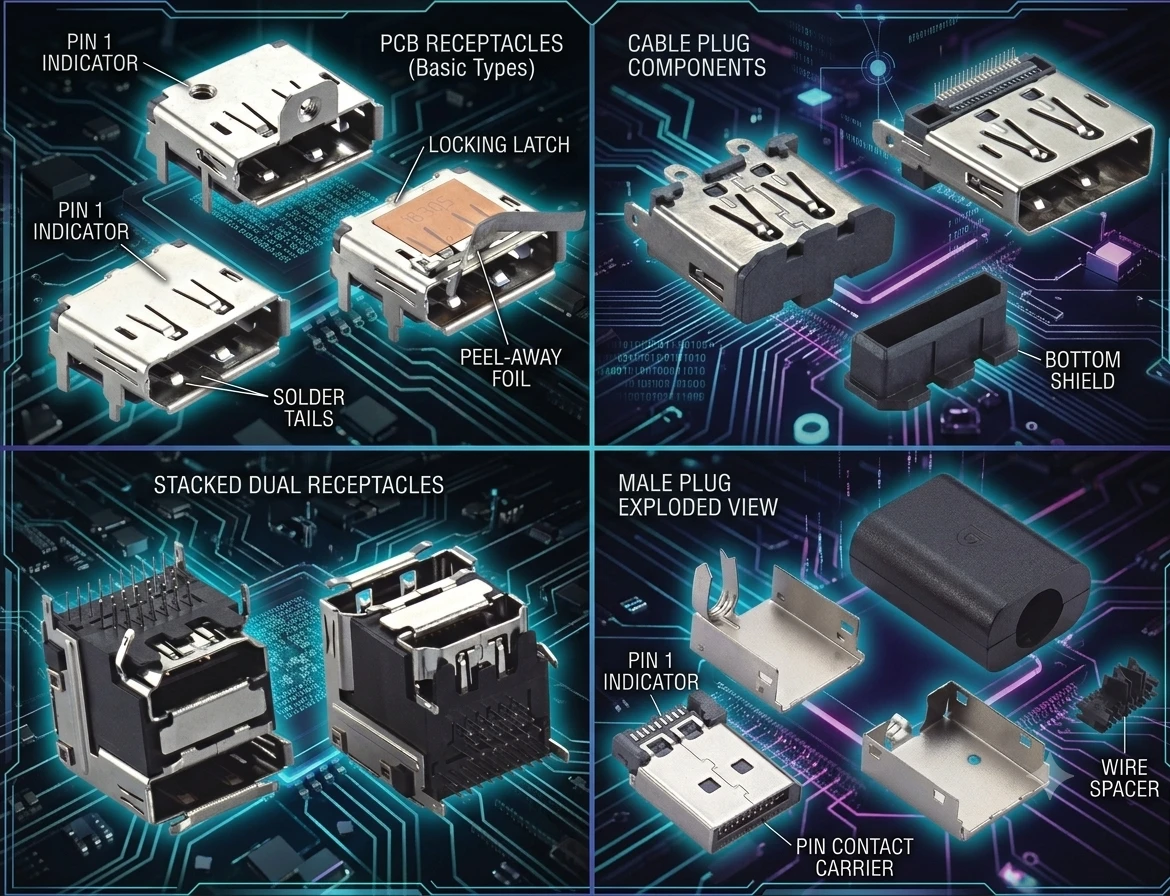
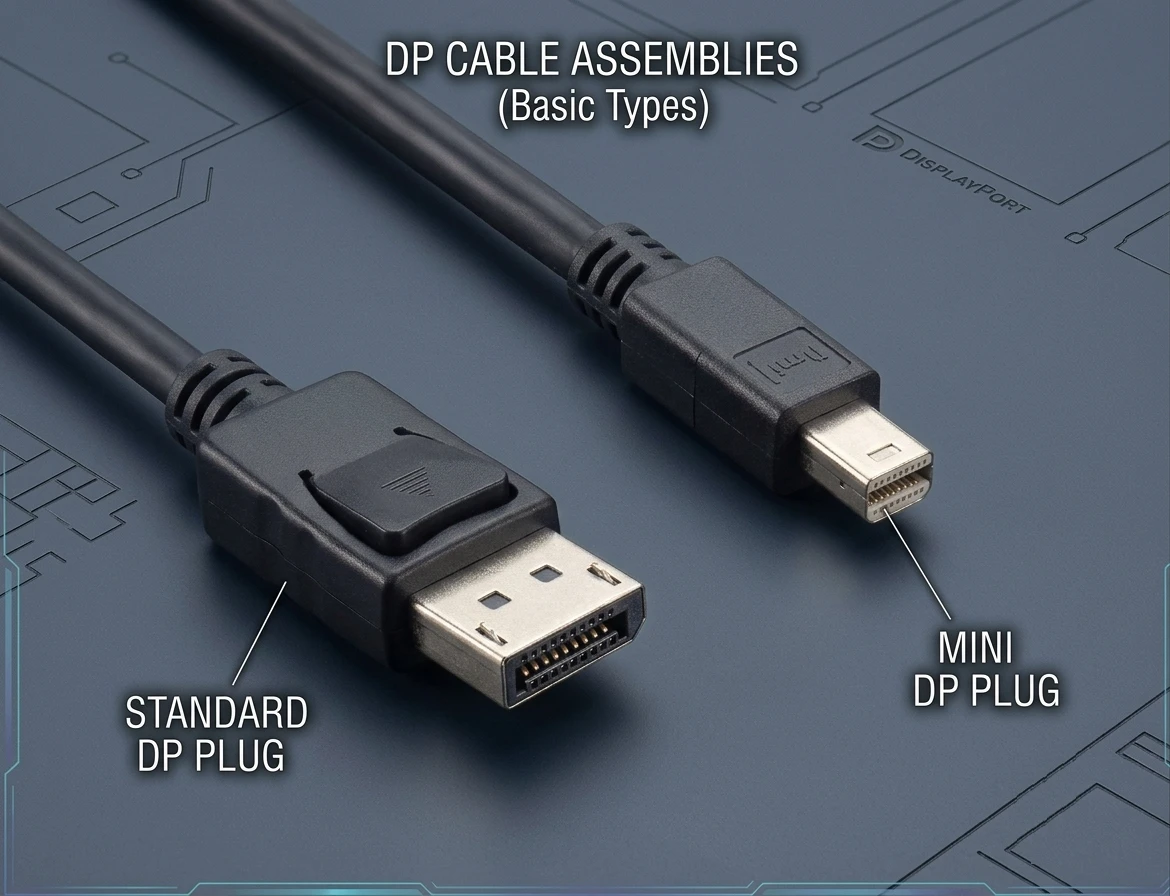
Featuring a 20-pin layout, the Standard DP utilizes a distinctive asymmetrical, polarized shape to eliminate mismatched orientation during insertion. Most importantly, standard industrial DP connectors incorporate a mechanical latch mechanism. Once plugged into the receptacle, the latch securely locks the connector in place. This is highly valued in high-vibration environments like transit systems, heavy machinery, or robotic arm perimeters to eliminate accidental pull-outs.
Mini DisplayPort (mDP)
At roughly one-fourth the footprint of a standard DP, the mDP retains the full 20-pin configuration. While previously a mainstay in compact laptops, it is widely utilized today across IPC systems and multi-display server graphic cards that require high-density I/O routing.
DP Alt Mode over USB Type-C
Modern industrial displays and embedded motherboards frequently implement the DisplayPort Alternate Mode (Alt Mode) over a native USB-C interface. While the physical interface is a Type-C connector, the underlying signaling protocol remains pure DisplayPort.
2. Core Architecture: Micro-Packet Architecture & Independent AUX Channel
A fundamental differentiator between DP and HDMI lies in their core signaling mechanisms. While HDMI relies on an analog clocking architecture (TMDS), DisplayPort operates on a micro-packet data architecture highly analogous to PCI Express. The DP connection is sustained by three structural pillars:
To keep pace with the demand for 4K, 8K, and high refresh-rate imaging, the Video Electronics Standards Association (VESA) has continuously pushed the data throughput of the DP standard:
👉 Looking for high-reliability connectors or custom wire harness assemblies? Contact our expert consulting team today.
As 5G, Edge AI, and Smart Manufacturing continue to accelerate globally, modern industrial environments demand far more than just "functional" video transmission. The industry now trends toward extreme bandwidth, zero latency, and ultra-high resolutions.
Within high-end hardware designs—including Industrial Computing (IPC), advanced medical imaging, automation surveillance, and Machine Vision systems—DisplayPort (DP) has emerged as a cornerstone video interface alongside HDMI, driven by its robust bandwidth and unique packet-based architecture.
At TZYR HWEY Enterprise Co., Ltd. (T.H.), we leverage our deep engineering consulting background to bring you a comprehensive technical breakdown of DisplayPort technology.
1. Physical Form Factors of DP Connectors
In hardware layout and custom cable assembly, DP connectors primarily present themselves in three physical form factors to accommodate diverse spatial footprints:
Standard DisplayPort
Featuring a 20-pin layout, the Standard DP utilizes a distinctive asymmetrical, polarized shape to eliminate mismatched orientation during insertion. Most importantly, standard industrial DP connectors incorporate a mechanical latch mechanism. Once plugged into the receptacle, the latch securely locks the connector in place. This is highly valued in high-vibration environments like transit systems, heavy machinery, or robotic arm perimeters to eliminate accidental pull-outs.
Mini DisplayPort (mDP)
At roughly one-fourth the footprint of a standard DP, the mDP retains the full 20-pin configuration. While previously a mainstay in compact laptops, it is widely utilized today across IPC systems and multi-display server graphic cards that require high-density I/O routing.
DP Alt Mode over USB Type-C
Modern industrial displays and embedded motherboards frequently implement the DisplayPort Alternate Mode (Alt Mode) over a native USB-C interface. While the physical interface is a Type-C connector, the underlying signaling protocol remains pure DisplayPort.
2. Core Architecture: Micro-Packet Architecture & Independent AUX Channel
A fundamental differentiator between DP and HDMI lies in their core signaling mechanisms. While HDMI relies on an analog clocking architecture (TMDS), DisplayPort operates on a micro-packet data architecture highly analogous to PCI Express. The DP connection is sustained by three structural pillars:
- Main Link: Composed of up to 4 independent high-speed differential signal pairs (Lane 0 to Lane 3), the Main Link handles bulk video and audio data payload transmission. Systems can adaptively scale from 1, 2, to 4 lanes depending on the required resolution, offering exceptional scalability.
- AUX Channel (Auxiliary Channel): A dedicated, bi-directional, low-latency pathway independent of the bulk video payload. The AUX channel handles critical EDID (extended display identification data) handshakes, HDCP (high-bandwidth digital content protection) authentication, and bi-directional touch-screen data feedback, resulting in superior Plug-and-Play stability.
- Hot Plug Detect (HPD): Operating on Pin 18, the HPD line provides real-time detection enabling the graphics controller (Source) to sense when a display device (Sink) is connected or removed.
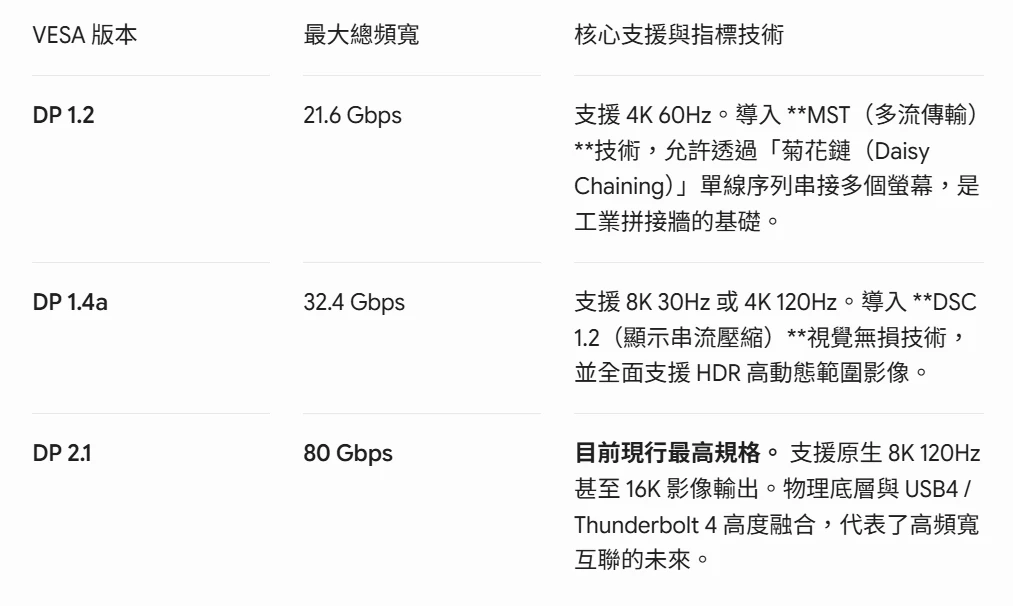
To keep pace with the demand for 4K, 8K, and high refresh-rate imaging, the Video Electronics Standards Association (VESA) has continuously pushed the data throughput of the DP standard:
4. How TZYR HWEY (T.H.) Empowers Your Connectivity
Connectors and wire harnesses might represent a minor fraction of your total bill of materials (BOM), but they act as the absolute lifeline for total system stability. As your strategic engineering and component consultant, T.H. delivers uncompromising quality control across all high-bandwidth protocols:- Front-End Design & Technical Reviews: Our engineering team acts as your consultant during the early R&D phases, reviewing specifications—such as impedance matching, EMI shielding structures, and plating thickness—to mitigate engineering risks before production begins.
- High-Mix, Low-Volume (HMLV) Adaptability: We provide highly agile custom wire harness and cable assembly manufacturing, accommodating specialized automation mock-ups and low-volume IPC projects with rapid turnaround times.
- Supply Chain & Cost Management: When global raw materials market prices fluctuate, T.H. leverages its industry insights to help you identify cost-effective, fully compatible modular alternatives that match the technical benchmarks of major tier-one manufacturers.
👉 Looking for high-reliability connectors or custom wire harness assemblies? Contact our expert consulting team today.
-

Rising Gold and Copper Prices: How TZYR HWEY (T.H.) Secures Connector Performance Amidst Cost Fluctuations
-
The Core Neural System: TZYR HWEY (T.H.) Introduces the Functions and Diverse Types of Connectors
-
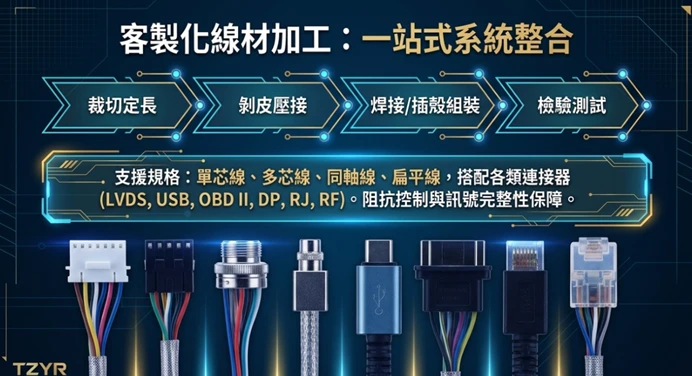
Engineering-Driven Reliability: How TZYR HWEY (T.H.) Guarantees Wire Harness Quality
-
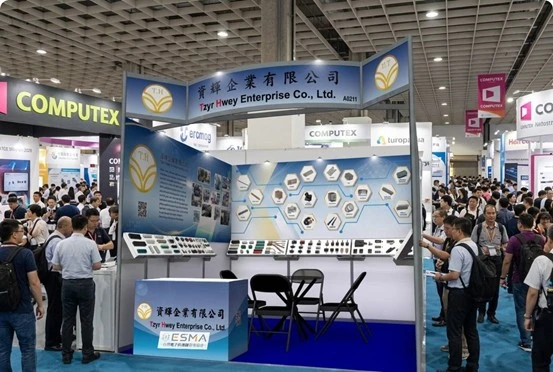
COMPUTEX 2026 Wrapped Up! Thank You All & See You Next Time